
Visibility of system status
Civilla's Michigan benefits case begins with residents waiting for letters after applying. One resident said: ''People want to know that their application is not lost in a pile of 1,000 other applications; that it has been seen.'' Visibility of system status means showing what the system received, what changed, and what happens next. When that state disappears, people repeat actions, abandon tasks, or call someone who can inspect the case.
What does visibility of system status mean?
Good feedback answers the user's next decision: did the action arrive, finish, fail, or enter another process?
"The design should always keep users informed about what is going on, through appropriate feedback within a reasonable amount of time."
What do 0.1 seconds, 1 second, and 10 seconds mean for a designer?
Nielsen's three limits change the feedback a designer owes the user.
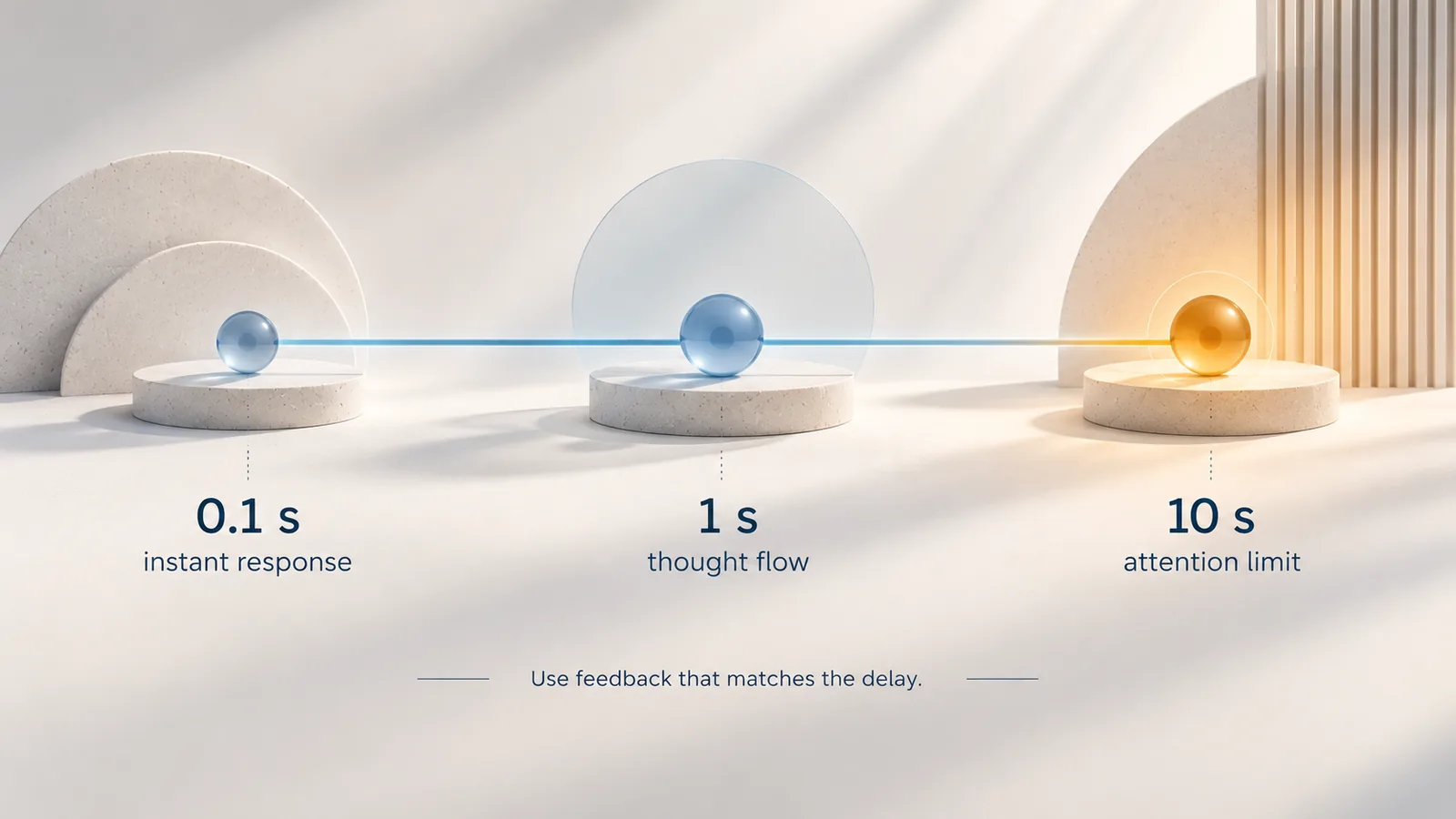
Within 0.1 seconds, response feels instant. Show a tiny state change proving cause and effect. A separate loader is unnecessary.
Within 1 second, the delay is noticed but thought continues. Show a busy state, or name the operation: "Saving settings."
After 10 seconds, attention breaks. Show real progress when it is measurable. Otherwise show the stage, the completed unit, or the next update. Never invent a percentage.
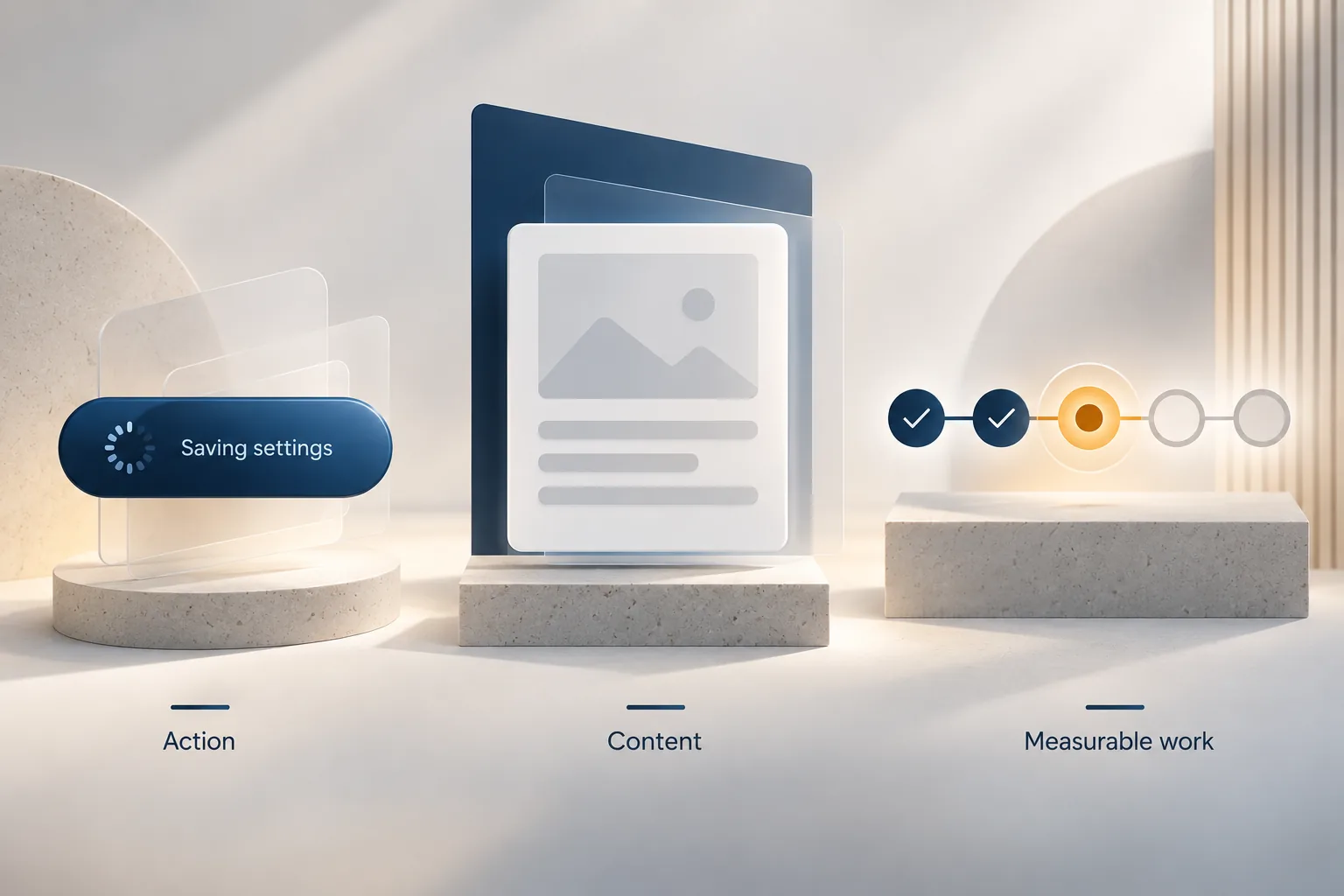
When should you use a spinner, a skeleton, or a progress bar?
Use a spinner for a short action, a skeleton for known content, and a progress indicator only for measurable work. One study found a 3-second skeleton felt roughly equal to a 1.5-second spinner. Useful context, not a universal rule.
What changes when the process takes days?
After days, the person may be asleep, travelling, or on another device while the case moves through teams the interface cannot observe. A spinner has no meaning over four days. "Under process" names motion without naming the case.
The status is no longer a widget. It is a process record that must travel with the case.
Civilla's tracker showed four milestones: application received, appointment scheduled, additional documents required, eligibility determination made. Its case study reports a 14% drop in calls shortly after launch. That is one project's result, not a universal promise.
What should a multi-day status page tell the user?
- Where is the case now?
- When did this stage begin or last change?
- Who owns the next movement?
- What happens next?
- When will the next update arrive?
- What can the user do while waiting?
If the timing is unknown, say when the next update will come. That sentence is the difference between a system that is quiet and a system that has forgotten you.